
Dry Needling vs Acupuncture: Key Differences & Which Is Right For You?
If you’ve been recommended to try dry needling treatment in Sydney for your elbow or wrist pain, you might be wondering: Isn’t that just acupuncture?
At Hand Therapy Experts, we hear this question from clients all the time: whether one is better than the other. While both involve the use of fine and sterile needles to reduce pain, the science behind how both treatments work differs.
Understanding how they differ can help you choose the treatment that best supports your recovery.
Quick Summary:
- 🔬 Key Difference: Dry needling is rooted in Western medical science and targets muscle trigger points, while acupuncture is based on Traditional Chinese Medicine and focuses on restoring the body’s energy flow (“qi”) through meridians.
- ✅ Same Tool, Different Purpose: Both treatments use fine, sterile needles to reduce pain — but the science, targets, and philosophy behind each are distinct.
- ⏱️ Treatment Timeline: Both treatments may take 2–3 sessions before noticeable improvement. Acupuncture courses typically range from 1 to 20 sessions depending on the condition.
- 🏥 Get Help: If you’re unsure which treatment is right for you, Hand Therapy Experts can assess your condition and recommend the most appropriate approach.
Knowing The Basics of Dry Needling and Acupuncture?
What Is Dry Needling?
Dry needling is a treatment technique used by hand therapists and other trained allied health professionals to treat muscle pain, trigger points and movement dysfunction. It is based on modern Western medicine, anatomy and neurophysiology.
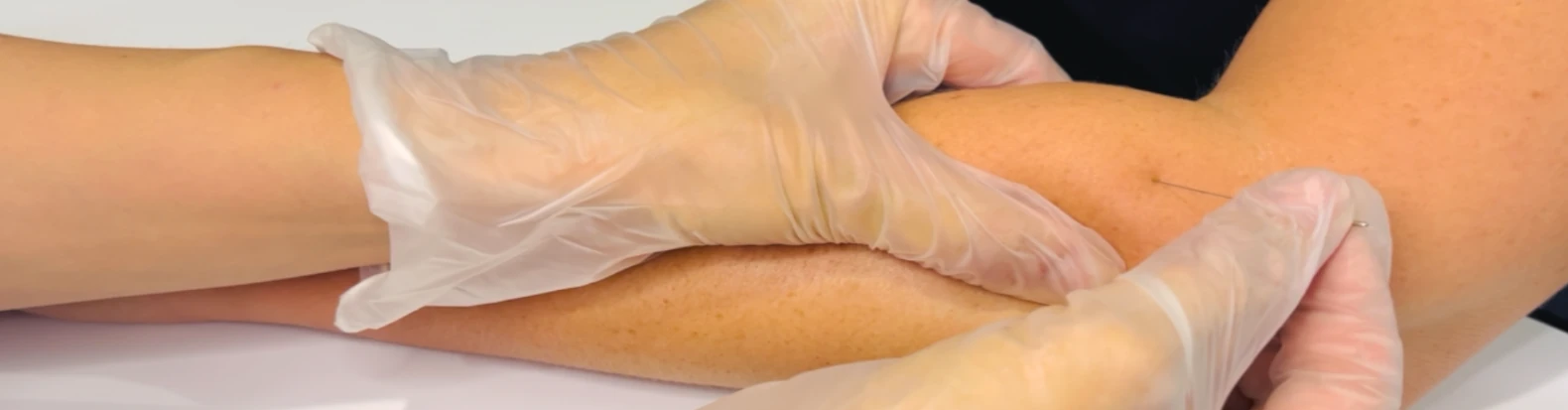
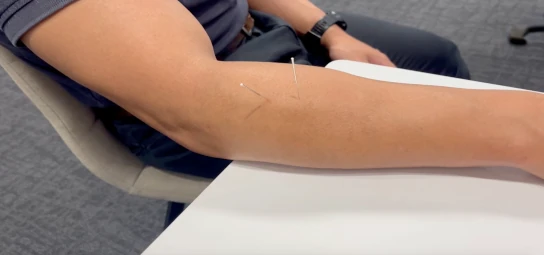
It is a fast and effective treatment procedure that can help with muscle pain or tension. Below are the steps during a dry needling treatment session at Hand Therapy Experts:
The treatment also addresses movement‑related pain, making it a valuable tool for healing hand, wrist and elbow injuries.
A trigger point, often described as a “knot” in the muscle, is a tight, sensitive band of muscle fibres that can cause local pain or refer pain to other areas.
How Acupuncture Differs
Both dry needling and acupuncture improve muscle pain. However, the science behind both treatments differs.
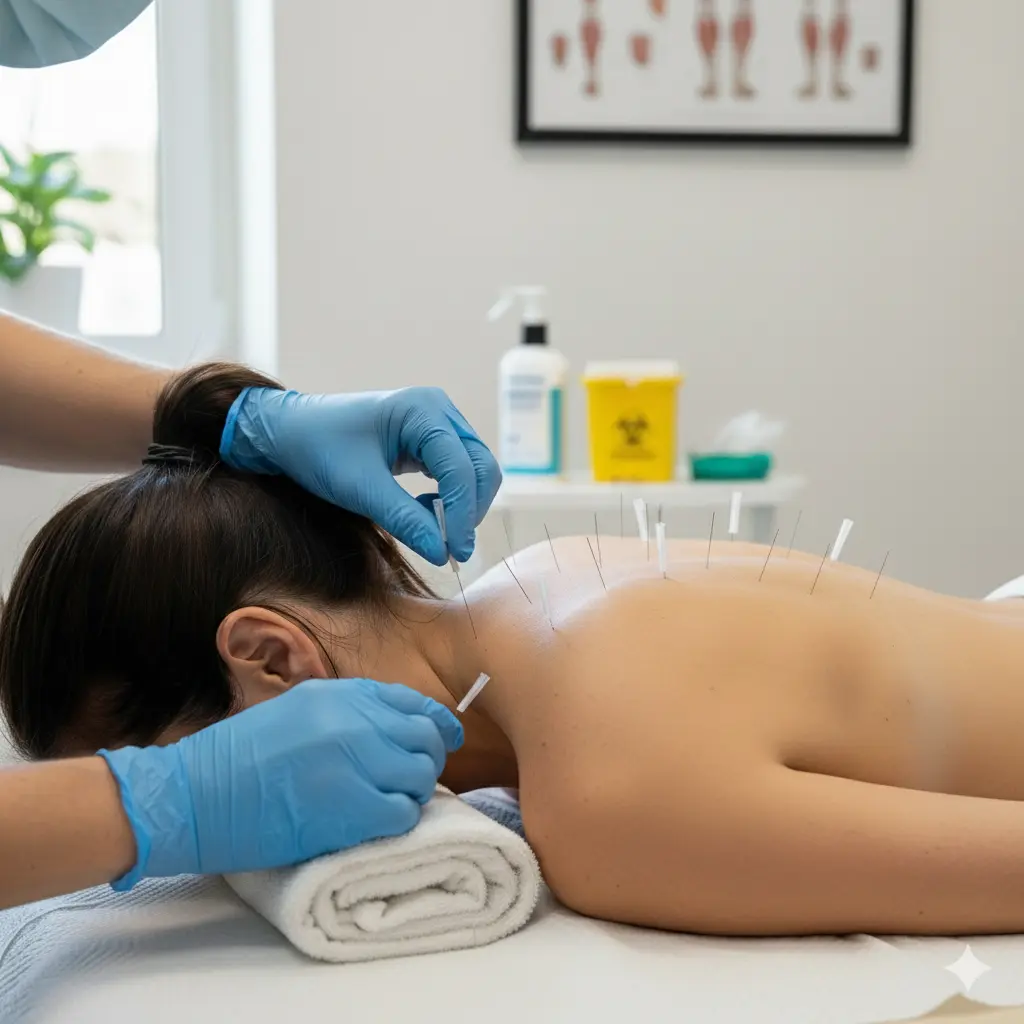
Acupuncture is a traditional treatment method based on Traditional Chinese Medicine (TCM). Instead of targeting muscle trigger points, acupuncture focuses on restoring the body’s flow of energy (“qi”) through pathways called meridians. Acupuncturists insert fine needles into specific meridian points to influence the body’s energy balance to improve muscle pain.
How They Work: The Science Behind Each Treatment
How Dry Needling Works (Trigger Point Release)
Research shows that irritated muscle fibres can become chemically sensitised, producing substances such as bradykinin, serotonin and prostaglandins (Shah et al, 2008). These chemicals increase nerve sensitivity, reduce blood flow, and perpetuate the pain cycle.
Dry needling aims to interrupt the pain cycle response by inserting a very fine needle directly into the trigger point, producing a local twitch response, a brief involuntary muscle contraction. This often feels like a muscle spasm or cramp for a few seconds. This twitch is a positive sign that the muscle is beginning to release.
Data suggests that a local twitch response in dry needling:
- Improves local blood flow
- Reduces pain-producing chemicals
- Calms sensitised nerves
- Reduces muscle tension
- Restores healthier muscle tone
How Acupuncture Works (Meridians & Qi)
In Traditional Chinese Medicine, the body is understood to have a network of meridians, which are pathways that carry something called ‘qi’, otherwise known as your life energy.
When qi flows smoothly, the body is thought to function normally. But if this flow becomes blocked or even imbalanced, discomfort or illness is predicted. Acupuncture is a treatment which aims to restore this balance by stimulating specific points along these meridians with very fine needles.
Practitioners of acupuncture may also use techniques like moxibustion, cupping, electrostimulation or massage to stimulate the effectiveness of the treatment for best results.
How Quickly Does Dy Needling Work Compared To Acupuncture?
The course of acupuncture treatment typically ranges from 1 to 20 sessions. Similar to dry needling for chronic pain, it may take 2 or 3 appointments before you notice a significant improvement. In addition to acupuncture, you may be offered complementary Traditional Chinese Medicine treatments during the same visit.
Some patients feel relief within days, though chronic conditions may require three weeks or longer for noticeable improvement.
Recovery speed depends on the individual; your hand therapist will review your progress in 1–2 weeks to assess effectiveness.
We will reassess your movement and symptoms to determine if you need further sessions or if different muscles are causing referred pain. It typically takes up to three sessions to notice significant improvements in pain and function.
Side Effects And Other Considerations
Is Dry Needling Safe?
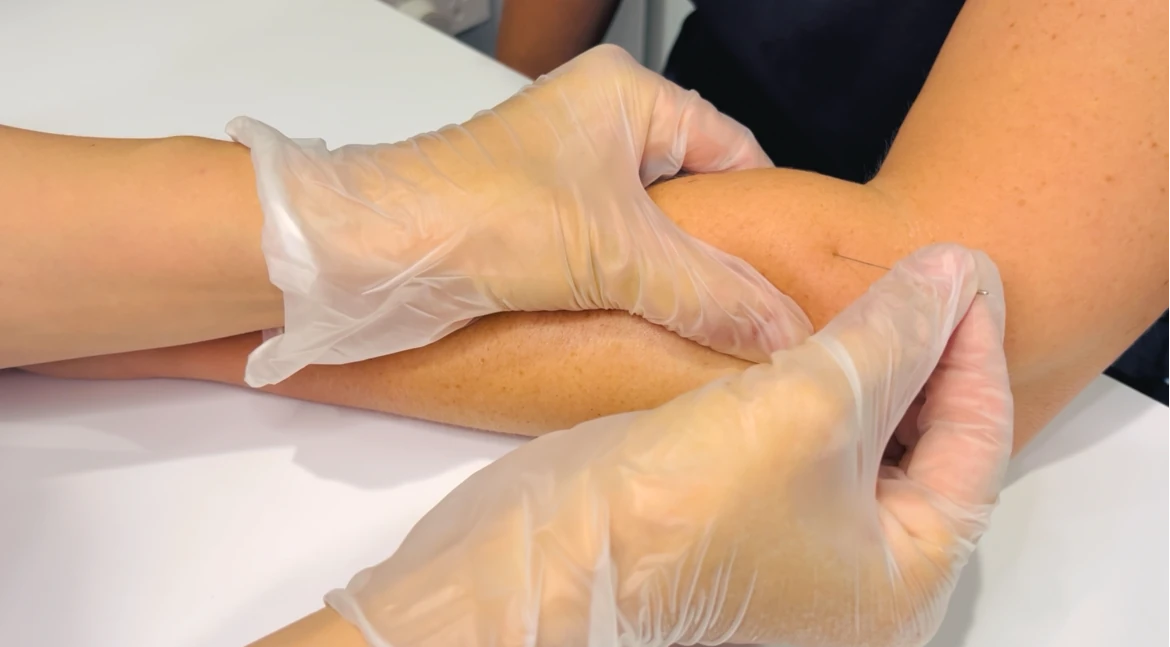
When performed by a trained allied health professional, dry needling is a safe and effective treatment for upper limb conditions.
We use fine, sterile needles to minimise infection risk, ensuring your safety is prioritised. This technique is only applied to patients whose specific medical conditions are clinically suitable for the procedure.
What About Acupuncture?
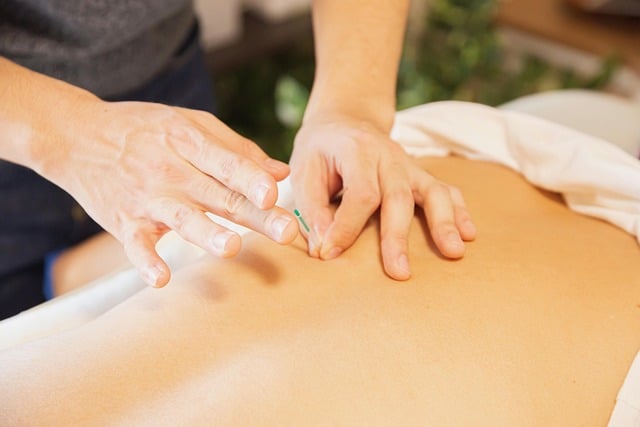
Acupuncture is a safe treatment technique performed by Traditional Chinese Medicine Practitioners or acupuncturists.
Like dry needling, it is only used on patients with medical conditions that are suited for dry needling and uses fine, sterile needles.
When Dry Needling Is Not Recommended?
Contraindications
While dry needling effectively relieves muscle tension and pain, it is not suitable for everyone. It should not be performed if you have:
- First trimester of pregnancy
- Bleeding disorders
- Having treatment for cancer
- Over a joint replacement or implant
- Metal allergies
- Axillary node dissection
- Heart valve replacement
- Needle phobia
If you are unsure whether dry needling is an appropriate treatment for you, please discuss your medical history with your hand therapist.
High-Risk Areas
While dry needling effectively relieves muscle tension and pain, it is not suitable for everyone. It should not be performed if you have:
When Acupuncture Is Not Recommended?
Acupuncture is not recommended for patients with these conditions:
- Bleeding problems or takes blood thinners
- Low immunity
- Heart disease
- Recent treatment for cancer
- Metal allergy
- Recent infection
If you are pregnant or may be pregnant, it’s important to notify your practitioner so no acupuncture points are used which may affect your pregnancy.
What to Expect After Each Treatment
After Your Dry Needling Session
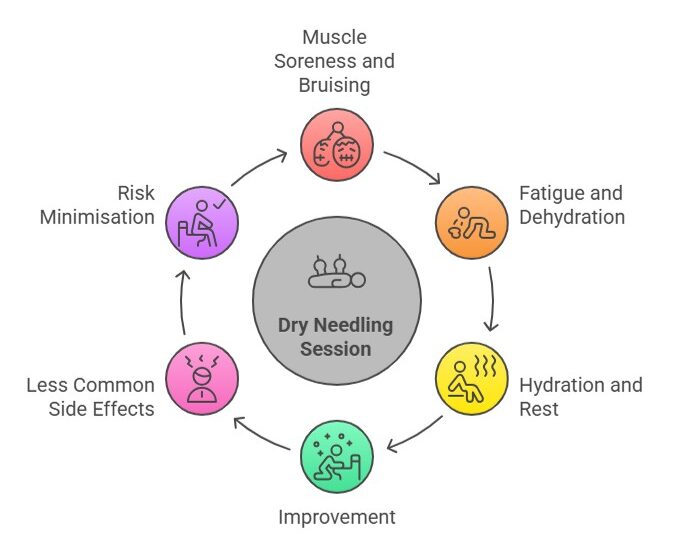
After a dry needling session, you can expect muscle soreness and bruising for 1-2 days. You may also feel fatigue or dehydration. These side effects are temporary and usually improve with staying hydrated and resting from strenuous exercise.
Less common side effects include dizziness or fainting. To minimise this risk, we treat the patient lying flat on a bed if it’s their first time receiving treatment.
Another, but less common, side effect is metal allergy. If you are allergic to metal, please notify your hand therapist.
After Acupuncture
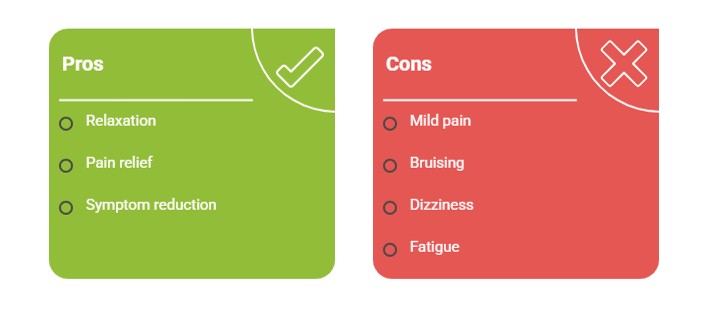
After acupuncture, you may feel relaxed with reduced pain and symptoms. You may also notice mild pain or bruising over the treated area, which will improve on its own.
Less common side effects include dizziness and fatigue.
What Happens When Dry Needling Hits A Nerve?
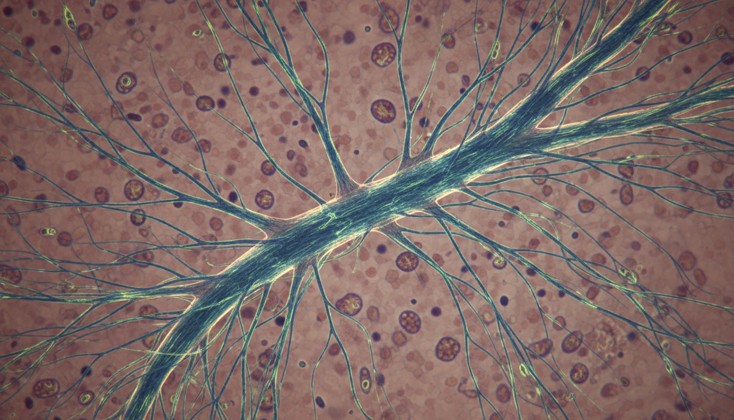
Dry needling can occasionally cause a sharp, ‘zapping’ sensation or temporary numbness if a needle contacts a sensitive nerve. Because active trigger points involve both muscle and nerve tissue, these areas can be hypersensitive to stimulus.
In most cases, any discomfort or ‘pins and needles’ disappears within minutes; it’s usually rare for symptoms to persist after a few days.
If you continue to experience these sensations during treatment, let your therapist straight away so they can adjust the technique and monitor your progress.
Cost & Insurance Considerations
How Much Does Dry Needling Cost In Australia?
Dry needling prices will inevitably vary in Australia depending on the practitioner type. These include physiotherapists, hand therapists, occupational therapists, osteopaths, and chiropractors. Fees will also vary by clinic, as pricing structures can differ from one to the next.
| 📋 Category | 🏥 Industry Range (Sydney) | 📍 Hand Therapy Experts |
|---|---|---|
| 💰 Initial vs. Follow-up Sessions | ||
| Initial Consultation | $145 – $265 Longer due to assessment |
$172 – $249 One arm or both arms |
| Follow-up Sessions | $100 – $250 | $142 – $187 |
| 🪡 Integrated Dry Needling Fee | ||
| Additional Needling Item | $7 – $30 Varies by number of needles used |
Billed as an additional item — not all patients require it |
| 🏦 With Private Health Insurance | ||
| Rebate Available? | ✅ Yes — if your policy includes physiotherapy or occupational therapy cover | |
| What You Pay | Gap fee only — the remainder after your insurer’s rebate. Amount depends on your level of cover and whether your annual threshold has been reached. | |
| 🩺 With Medicare (Chronic Condition Management Plan) | ||
| Medicare Rebate | $60.35 rebate (2025–2026 rate) for physiotherapy or occupational therapy | |
| What You Pay | Gap fee — the remaining amount after the Medicare rebate, which varies by session cost. Speak to your GP to determine eligibility. | |
How Much Does Acupuncture Cost?
Acupuncture sessions typically cost $110–$150. While many private health funds cover these treatments, acupuncture provided by Traditional Chinese Medicine practitioners is generally not eligible for Medicare rebates under GP Chronic Condition Management Plans.
About The Author
Chen Li is an Accredited Hand Therapist based in Sydney’s North Shore, with over 10 years of experience in assessing and treating conditions of the hand, wrist, and elbow.
She has extensive expertise, offering effective and conservative hand therapy treatment while supporting patients through post-surgical rehabilitation.
