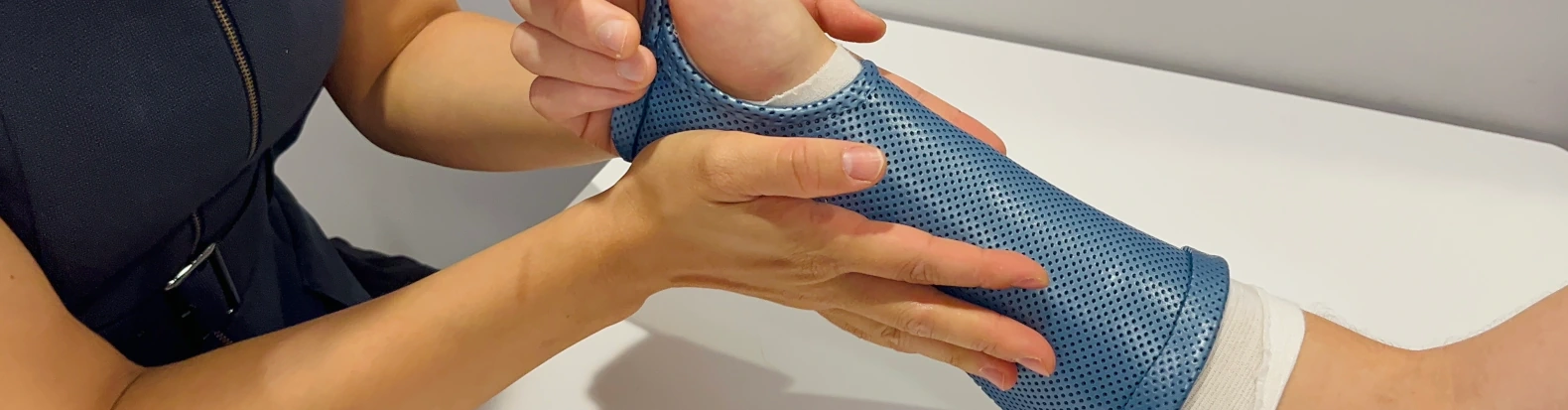
Hand Therapy Experts is a hand and wrist clinic on Sydney’s North Shore and Northern Beaches. We provide non-surgical assessment and treatment for TFCC injuries (triangular fibrocartilage complex), a common but often misdiagnosed cause of wrist pain on the ulnar (pinky) side.
We also support recovery following TFCC surgery.
Accredited hand therapist Chen Li oversees your care with over ten years of experience treating TFCC tears, sprains and wrist injuries across all activity levels – from desk workers and tradies to recreational and competitive athletes.
The Triangular Fibrocartilage Complex (or TFCC) is a small collection of cartilage and ligament tissue. It sits vertically between the end of the ulna (the pinky-side forearm bone) and the carpal bones of the hand. Located on the ulnar side, this ligament is best described as a fairly resilient and tough fibrous hammock.
The structure’s main job is to help protect, cushion and stabilise your wrist joint and act as an effective shock absorber when doing daily activities (like pushing up from a chair or lifting).
For more information, read our complete guide to TFCC injuries.
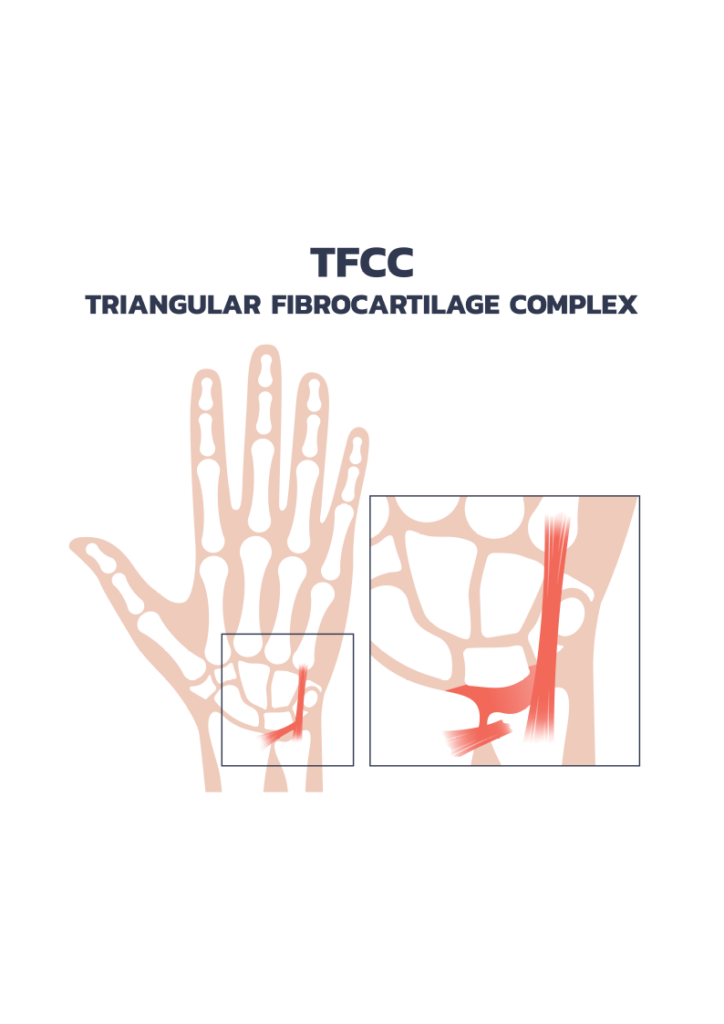
TFCC injuries can be caused by a traumatic injury, gradual degeneration of the triangular fibrocartilage complex, or a combination of both.
People of any activity level can develop a TFCC injury. It is also common in those with a history of a broken wrist – research suggests more than half of all wrist fractures involve an undiagnosed TFCC tear. You are also more likely to develop a symptomatic tear as you age, mainly due to changes in ligament integrity and bone density.
Not all Triangular Fibrocartilage Complex injuries are the same, and are classified using the Palmer system.
Some injuries present as a ligament strain, while others involve a larger tear with joint instability. Severity also depends on how the injury occurred, the location of the tear (central or peripheral), associated fractures, wrist arthritis, or lunate and/or ulnar chondromalacia.
The peripheral part of the TFCC has more blood supply, whereas the central part is avascular. Mild tears may take 3 months to heal, while large or unstable tears may require surgery and take 3-6 months.
Every TFCC injury presents differently
Severity depends on the location of the tear, which structures are involved, and whether wrist arthritis is present
Healing timeframes vary from 3 months to 6 months depending on severity
No referral, no waiting for scans, no being passed around. Chen Li personally assesses every TFCC patient hands-on from their very first appointment.
Every patient is personally treated by the clinic’s owner and accredited hand therapist, Chen Li, ensuring consistent, expert care from your first appointment through to full recovery. Her approach is purely non-surgical, with a deep understanding of TFCC injury types
We provide a comprehensive range of TFCC wrist injury treatment options for adults and children’s hand therapy across Sydney’s North Shore and Northern Beaches.
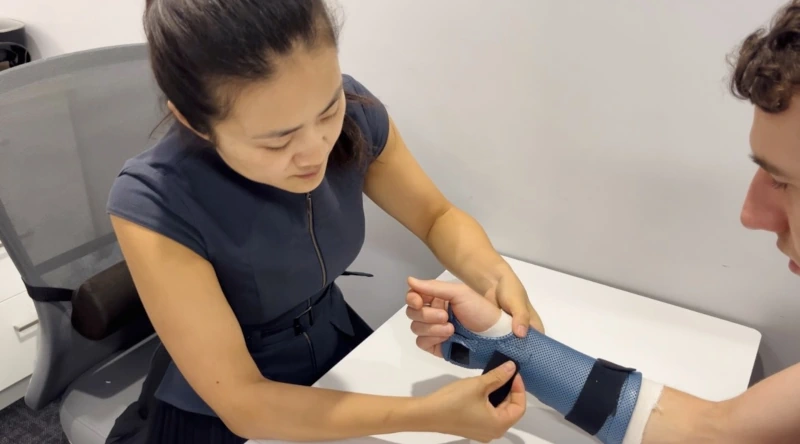
Wrist splints or wrist widgets help to stabilise the wrist joint to allow the TFCC injury to heal
May need to be worn all the time, or for specific tasks that aggravate your injury, such as work or sport
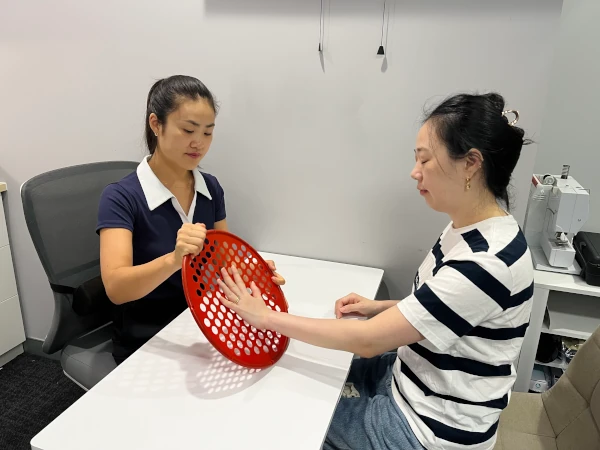
Wrist strengthening exercises are provided to stabilise the wrist joint
Exercises may also include wrist joint proprioception and range of motion
Pain and swelling may be managed through a compression garment, or immobilising the wrist with a splint or wrist widget
You may also be advised to speak to your GP or hand surgeon to take pain medications or anti-inflammatories
Advice on activities to avoid until the injury heals will be provided
You may also be provided with modified gym exercises you can do
If your TFCC injury is unstable, involves a large tear, or has not fully resolved with hand therapy, a hand surgeon referral via your General Practitioner may be required. Chen will discuss this with you openly and coordinate the referral process if needed.
After surgery, you may be referred by your hand surgeon for hand therapy. Your initial appointment will include wound care, dressing change and splinting. Wrist range of motion and strengthening exercises will commence depending on the surgeon’s guidance. As you regain more movement, strengthening and joint proprioception exercises come next.

Recovery from a TFCC injury depends on the severity of the tear, your age, activity level and how early treatment begins. Below is a general guide to what most patients can expect with conservative treatment.
Immobilisation with wrist widget or wrist splint, graded strengthening and range of motion exercises.
Wean from wrist widget or wrist splint, graded strengthening and gradual return to sport and hobbies.
Full return to sport and hobbies.
Please note – These timeframes are estimates only, acting as a general guide. Actual recoveries will vary between patients, depending on the severity of injury, the patient’s age, work requirements and hobbies.
Unfortunately, yes, an untreated TFCC tear can worsen over time. Without proper management and continued loading of the wrist, it can cause a partial tear to progress to a chronic case, leading to continual instability, persistent pain and an increased risk of long-term joint damage.
The good news is that TFCC injuries respond well to early hand therapy. The sooner we can begin your treatment, the better the outcome – and the lower the likelihood that surgery will become necessary. Book an assessment with Chen Li today – no referral needed.

Chen Li is a dual Accredited (AHTA) and Certified (USA) hand therapist based on Sydney’s North Shore, with over a decade of experience treating TFCC injuries and wrist conditions across all activity levels.
Accredited Hand Therapist (AHTA)
Australian accreditation
Certified Hand Therapist (CHT)
USA certification – the highest global standard
Bachelor of Applied Science
Physiotherapy
Associate Member
NSW Hand Surgery Association
Multilingual Consultations
English, Mandarin & Shanghainese
Read more about Chen →


Be seen today for wrist pain treatment at our North Shore or Northern Beaches clinic. Book online or contact us directly.

North Shore clinic – appointments available
Cromer location – appointments available
.
