
Understanding Symptoms, Diagnosis, and Treatment for Thumb UCL Injuries
Definition:
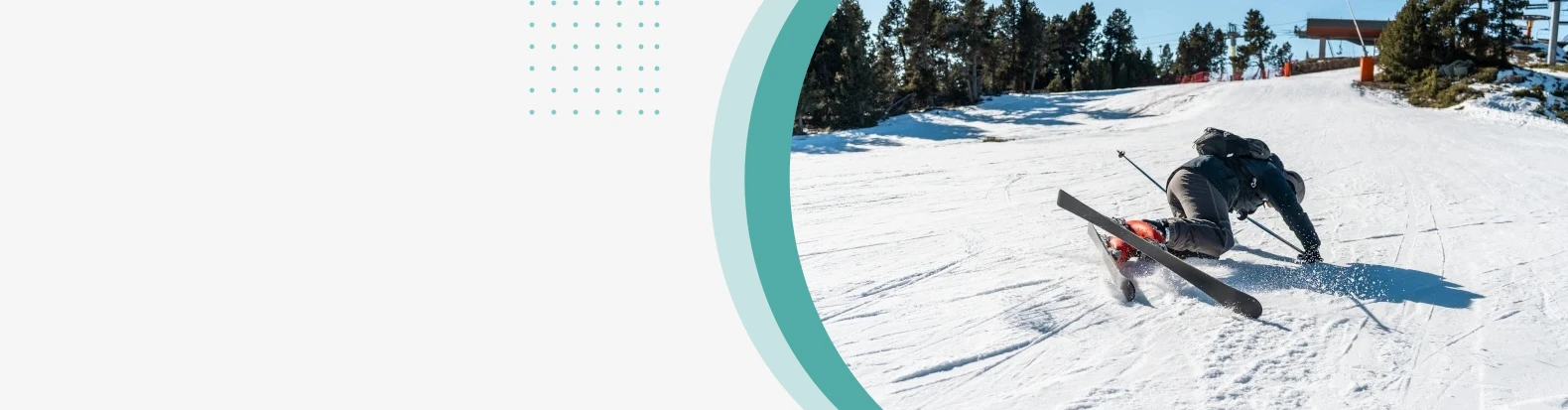
Skier’s thumb is a common term used to describe an injury to the ulnar collateral ligament (UCL) of the thumb’s metacarpophalangeal (MCP) joint. It involves a tear of this ligament, which is usually caused by skiing accidents, falls, or trauma during contact sports like basketball, netball, or cricket.
Your 60-Second Rundown On Skier’s Thumb
-
 What It Is: A tear of the ulnar collateral ligament (UCL) at the base of the thumb, usually caused by the thumb being forced sideways or backwards during a fall or contact sport.
-
 Who’s at Risk: Common in skiing and snowboarding, ball sports like cricket, basketball and netball, and everyday falls or bike accidents.
-
 Signs to Watch For: Pain at the base of the thumb, a pop at the time of injury, swelling, bruising, a tender lump, and weakness when pinching or gripping.
-
 Why a Stener Lesion Matters: The torn ligament is displaced and cannot heal naturally in its normal position, so a Stener lesion generally requires surgical repair.
-
 Treatment Options: Sprains and partial tears can often be managed with a thermoplastic thumb spica splint through hand therapy. Avulsion fractures and complete tears need assessment to determine the appropriate treatment, while Stener lesions generally require surgical repair.
-
 No Referral Needed: You can see a hand therapist for assessment and treatment without a GP referral.
What Is The Role of The Thumb Ulnar Collateral Ligament?
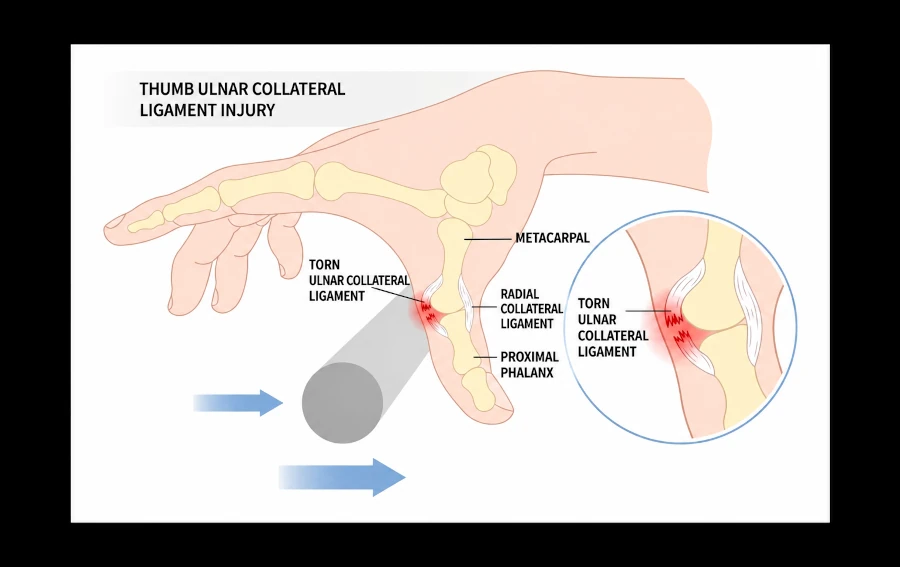
Collateral ligaments are vital to the functionality of your thumb, attaching to the sides of the base joint (metacarpophalangeal joint).
The thumb has two main collateral ligaments: the ulnar collateral ligament (UCL) and the radial collateral ligament (RCL).
Both ligaments prevent excessive sideways motion while providing essential stability. Without a fully functioning UCL, your thumb joint becomes loose and unstable, making everyday tasks like pinching or gripping painful and challenging.
What Are The Common Causes of Skier’s Thumb?
A Skier’s thumb injury commonly occurs during contact, but it can also be caused by a fall during non-contact sports.The thumb is often forced into a hyperextended or abducted position, tearing the ulnar collateral ligament. Any sport involving heavy hand usage can cause a UCL injury.
These activities can be broken down as follows:
Sports-related activities
- Skiing: Falling onto the thumb whilst skiing.
- Snowboarding: Catching the thumb on the ground in a hard fall.
- Soccer / Football: Goalkeepers are most likely to be affected. Scenarios include jamming the thumb when saving a hard shot.
- Cricket & Baseball: A hard ball bending the thumb backwards.
- Basketball & Netball: A fast pass bending the thumb sideways.
Non-sports-related activities
- Falls or tripping over: Causing you to reach out to break your fall on hard surfaces like pavements, ice or stairs.
- Biking accidents: Falling off your bike (or motorbike) while gripping its handlebars.
- Dog walking: A strong pull on a lead wrapped around the thumb.
Signs And Symptoms Of Skier’s Thumb
Skier’s thumb is a notoriously painful injury due to its location and the specific ligament involved (the UCL).
As one of the main supportive ligaments of the thumb metacarpal joint, UCL injuries are usually triggered because the thumb was bent too far sideways or backwards. This can produce a wide range of symptoms, such as:
-
At the moment of injury
- Pain: Located over the thumb ulnar collateral ligament.
- A “pop” sound / sensation: Some people feel or hear a pop or tear at the moment of injury.
-
Within the first few hours
- Throbbing & warmth sensation: This might also be accompanied by tenderness or achiness.
- Swelling: The base of your thumb may puff after the injury.
-
Over the following days
- Bruising: You might see bruising forming around the joint area, which could spread towards the palm over a few days.
- Lump: A small, tender lump can also appear on the inner side of your thumb.
-
When you use your thumb
- Weakness: You may find it harder to perform a pinching or gripping motion, usually accompanied by pain and joint instability.
- Looseness: Present in the thumb metacarpal joint, in comparison to the non-injured thumb.
Every injury is different. Symptoms may appear in a different order, or not all at once.
What Is A Stener Lesion? A Complication Of Skier’s Thumb
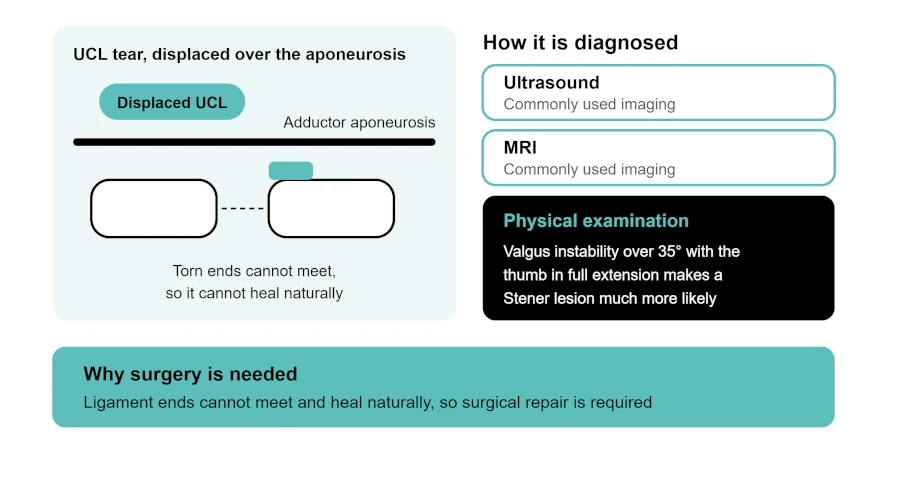
A Stener lesion is a tear of the thumb’s ulnar collateral ligament (UCL) where the torn ligament becomes displaced superficial to the adductor aponeurosis. Because this displacement prevents the ligament ends from meeting and healing naturally, surgical repair is required when a Stener lesion is present.
Diagnosing Stener Lesion
Ultrasound and MRI are commonly used to diagnose a Stener lesion. A physical examination can also indicate its likelihood when a patient presents acutely for hand therapy.
Specifically, valgus instability of more than 35 degrees with the thumb joint in full extension may indicate tears to both the proper and accessory collateral ligaments, making a Stener lesion much more likely.
How a Thumb UCL Injury Is Diagnosed
To accurately diagnose an injury to the first metacarpophalangeal (MCP) joint, you will need a physical examination alongside imaging. The exam involves looking for any localised tenderness and joint laxity over the ulnar collateral ligament, comparing it to your uninjured thumb using a radial-ulnar stress test
Below is the grading system for thumb collateral ligament injuries:
| Grade | Description |
|---|---|
| Grade 1 | Sprain with no joint instability (incomplete tear) |
| Grade 2 | Asymmetric joint laxity but endpoint present (incomplete tear) |
| Grade 3 | Joint instability without endpoint and 30-35 degrees of joint space opening or 10-15 degrees more than contralateral thumb (complete tear) |
To assess for ligament laxity of the proper collateral ligament of the UCL, the thumb is examined in 30 degrees of MCP joint flexion with a valgus force applied. To assess the accessory collateral ligament of the UCL, a valgus stress is applied with the thumb in neutral extension. Examiners assess for laxity in comparison to the non-injured hand and whether there is an end-point in joint stability.
A hand x-ray is also used to assess for thumb UCL avulsion fractures. MRI and ultrasound are used to assess suspected Stener lesions or complete tears, which requires surgical fixation.
Treating Skier’s Thumb: Understanding Your Options
Treatment for Skier’s thumb will depend on the severity of the ligament tear. Simple sprains, partial tears or minimally displaced avulsion fractures can be managed conservatively with a thermoplastic thumb spica splint. Complete tears, large avulsion fractures or Stener lesion would require hand surgeon review for surgery.
Severity of UCL injury and management
- Sprain or partial tear with stable MCP joint Hand therapy: immobilisation with thermoplastic thumb spica splint for 4 weeks
- Complete tear Hand surgeon assessment for surgical intervention
- Avulsion fracture Minimally displaced fractures may be managed with a thermoplastic thumb spica splint for 4 weeks. Hand surgeon evaluation is recommended for large or displaced fragments, with hand therapy post-operatively if surgery is required.
- Stener lesion Hand surgeon review for surgery. Therapy post-operatively
When to See a Hand Therapist for Skier’s Thumb
If you have a suspected Skier’s thumb or thumb UCL injury, you can see a hand therapist immediately for an assessment and treatment management plan. A hand physiotherapist can refer you for a hand x-ray to assess whether your injury can be managed through conservative treatment, or recommend a referral to a hand surgeon through your GP.
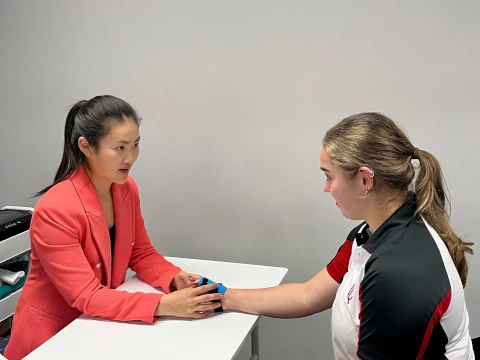
Taping, Strapping And Splinting For Skier’s Thumb
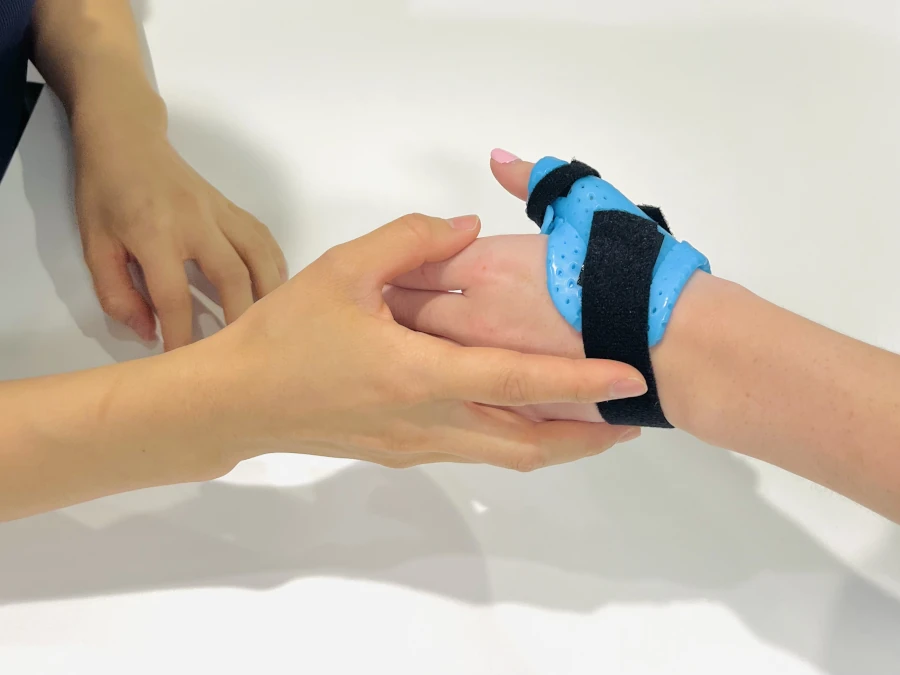
The goal of immobilisation with thumb splinting is to allow the soft tissue or surgical repair to heal.
A hand-based thermoplastic thumb spica splint is the recommended treatment for Skier’s thumb injuries, whether managed conservatively or post-operatively.
Taping and strapping can be used once you have been cleared to return to sport to help prevent re-injury.
See How a Custom Thumb Splint Is Made
Quickfire Questions On Skier’s Thumb
How Long Does The Condition Take To Heal?
Skier’s thumb injuries can be slow to heal. Splinting is recommended for 4-6 weeks, depending on severity of injury and pain. It is common for patients to still experience thumb pain at 8-12 weeks from the injury date.

Returning To Sport: Can I Ski With A UCL Injury?
It is not recommended that you ski or participate in contact sports with a Skier’s thumb injury until you are cleared by your hand therapist or hand surgeon. If the ligament has not healed sufficiently to begin strengthening or splint weaning, engaging in high-risk activities may worsen the injury.
What Happens If Skier’s Thumb Is Left Untreated?
As the thumb ulnar collateral ligament provides thumb stability, if a UCL tear or Stener lesion is untreated, it may lead to ongoing pain, thumb instability and reduced pinch strength or thumb function.
Skier’s Thumb Surgery: When It’s Needed And What To Expect
Skier’s thumb surgery is recommended for patients with a Stener lesion, large or displaced avulsion fractures or complete thumb UCL tear. A hand surgeon review is required to determine whether surgery is indicated.
Post-Surgical Hand Therapy Rehabilitation For Skier’s Thumb
If you’ve had thumb ulnar collateral ligament repair surgery, your hand surgeon will refer you for post-operative hand therapy.
Post-operatively, hand therapists assist with hand wound management, custom splinting in Sydney and scar management. When cleared by your surgeon, range of motion and strengthening exercises can be commenced.
References
Anderson, D. (2010). Skier’s thumb. Australian Family Physician, 39(8), 575–577.
Huynh, M. N. Q., Tang, K., & Cheung, K. (2020). A comparison of conservative and operative management of thumb ulnar collateral ligament avulsion fractures in children. HAND, 15(6), 812–817. https://doi.org/10.1177/1558944719831237
Mahajan, M., & Rhemrev, S. J. (2013). Rupture of the ulnar collateral ligament of the thumb—A review. International Journal of Emergency Medicine, 6, Article 31. https://doi.org/10.1186/1865-1380-6-31
McKean, J. (2026). Thumb collateral ligament injury. Orthobullets. https://www.orthobullets.com/hand/6040/thumb-collateral-ligament-injury
About The Author
Chen Li is an Accredited Hand Therapist based in Sydney’s North Shore, with over 10 years of experience in assessing and treating arthritic conditions of the hand, wrist, and elbow to help patients regain strength and mobility.
She has extensive expertise, offering effective and conservative hand therapy treatment while supporting patients through post-surgical rehabilitation.

Experiencing Thumb Pain After An Injury?
Book A Hand Therapy Assessment In Sydney – No Referral Needed
Be seen today at our North Shore or Northern Beaches clinic. Book online or contact us directly.
We also treat a number of other conditions, including thumb arthritis, carpal tunnel, tennis elbow, hand fractures and dislocations, mallet finger, and more.
