Posted by Chen Li in wrist pain on May 27th, 2026
First Published: 27 May 2026 • 25 Min Read •
Hand therapy is a specialised area of rehabilitation that focuses on injuries and conditions affecting the hand, wrist, elbow and upper limb.
In Australia, an Accredited Hand Therapist is a Physiotherapist or Occupational Therapist who has completed advanced training in upper‑limb rehabilitation. Hand therapists have in‑depth knowledge of hand and upper‑limb anatomy, common injuries and the most effective treatment options.

 What It Is: Hand therapy is specialised rehabilitation for the hand, wrist, elbow and upper limb.
 Who Treats You: An Accredited Hand Therapist. They have completed 3,600+ clinical hours, 300+ hours of advanced education, and a one-year mentorship – representing the highest standard of upper-limb care in Australia.
 Early Treatment Is Important: Many hand injuries and conditions respond better when assessed early. In some cases, you can see a hand therapist without a GP referral such as Hand Therapy Experts.
 Wide Range of Conditions: Hand therapists treat fractures, tendon injuries, nerve compressions, arthritis, post-surgical rehabilitation and more – for both adults and children (known as Paediatric hand therapy).
 Treatment Approach: Treatment is structured across four phases: protection, mobilisation, strengthening, and a return to daily activities (such as work or sport). It is usually tailored to your injury and goals.
 Research-Backed Care: Hand therapy is well supported by clinical evidence, with studies showing improved pain, strength and function across a wide range of upper-limb conditions.
| Condition | Body Area Affected | Conservative or Post-Surgical? | Treatment Aim |
|---|---|---|---|
| Carpal tunnel syndrome | Wrist / median nerve | Conservative and post-surgical | Reduced numbness, pins and needles, improved hand strength |
| Distal radius fracture | Wrist | Conservative and post-surgical | Functional range of motion and strength; return to work and hobbies by 2-3 months after injury or surgery |
| Metacarpal fracture | Hand | Conservative and post-surgical | Functional range of motion and strength; return to work and hobbies by 2-3 months after injury or surgery |
| Trigger finger | Finger | Conservative and post-surgical | Reduced clicking and swelling, return to hobbies by 4-6 weeks after injury or surgery |
| Dupuytren’s contracture | Hand / finger | Conservative and post-surgical | Improved range of motion; return to hobbies by 6-12 weeks after surgery |
| Tendon repair (flexor/extensor) | Finger / hand | Conservative and post-surgical | Functional range of motion, return to work and hobbies by 8-12 weeks after surgery |
| Rheumatoid arthritis | Hand / wrist | Conservative and post-surgical | Reduced pain and improved hand function; return to hobbies by 3 months after surgery |
| Cubital tunnel syndrome | Elbow / ulnar nerve | Conservative and post-surgical | Reduced numbness, pins and needles; improved hand strength |
| Wrist osteoarthritis | Wrist | Conservative and post-surgical | Reduced pain and improved hand function; return to hobbies by 3 months after surgery |
| Thumb osteoarthritis | Thumb | Conservative and post-surgical | Reduced pain and improved hand function; return to hobbies by 3 months after surgery |
Disclaimer: Treatment aim and outcome depend on the severity of the injury, whether surgical management is required, and your work occupation and hobbies. The timeframes provided are general guidelines and may vary. Please discuss your expected outcome and treatment timeline with your hand therapist or hand surgeon.
Hand therapy supports people with both minor and complex hand, wrist and elbow conditions by providing timely assessment, accurate diagnosis, injury prevention and evidence‑based treatment.
With advanced knowledge and skills on hand and upper limb conditions, seeing a hand therapist leads to better outcomes in a specialised area of physiotherapy or occupational therapy. Delay in seeing a hand therapist or receiving early treatment may result in poorer outcomes and hand deformities.
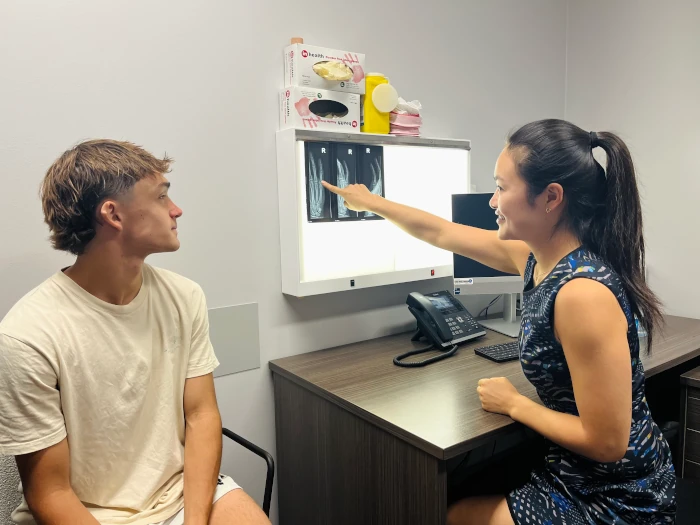
For upper injuries and conditions, there is no one more qualified to get tailored treatment. Seeing a hand therapist comes with a number of benefits which include:
In Australia, an Accredited Hand Therapist (AHT) is a Physiotherapist or Occupational Therapist who has been formally assessed as having the advanced knowledge and clinical skill required to deliver safe, evidence‑based upper‑limb rehabilitation.
The AHT credential is awarded by the Australian Hand Therapy Association (AHTA). To become an AHT, an AHPRA‑registered Occupational Therapist or Physiotherapist must complete:
Ongoing professional development and contributions to the hand therapy profession is required to maintain the AHT credential every 5 years.
Hand therapy is a high-demand profession in Australia. With an ageing population, high rates of workplace injuries, and growing awareness of specialist upper-limb care, patients are seeking expert treatment to achieve the best outcomes after an injury.
More physiotherapists and occupational therapists are pursuing careers in hand therapy to help patients recover faster, return to work sooner, and improve their quality of life.
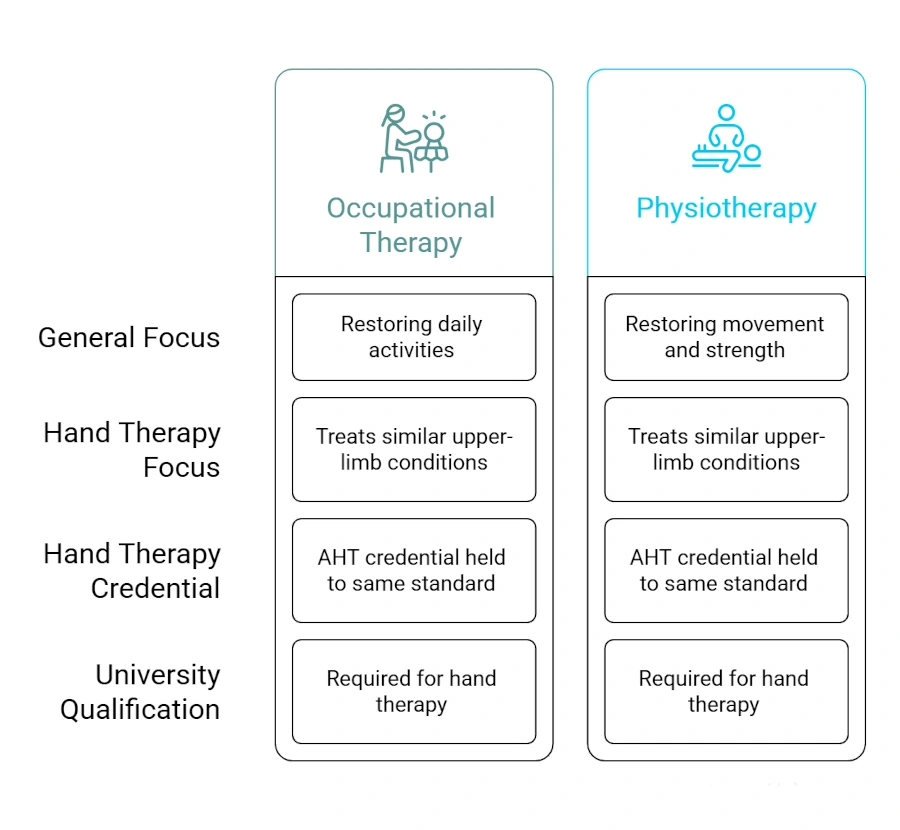
Both Occupational Therapists and Physiotherapists can work as hand therapists and specialise in the area of hand therapy. Occupational Therapy and Physiotherapy are both university qualifications, and a degree in either is required to commence working in hand therapy.
In general practice, Occupational Therapists focus on restoring a patient’s ability to perform daily activities and functional tasks, while Physiotherapists focus on restoring movement, strength and physical function. In hand therapy, however, both professions treat very similar upper-limb conditions – and once a therapist holds the AHT credential, they are held to the same standard of advanced clinical care regardless of their background.
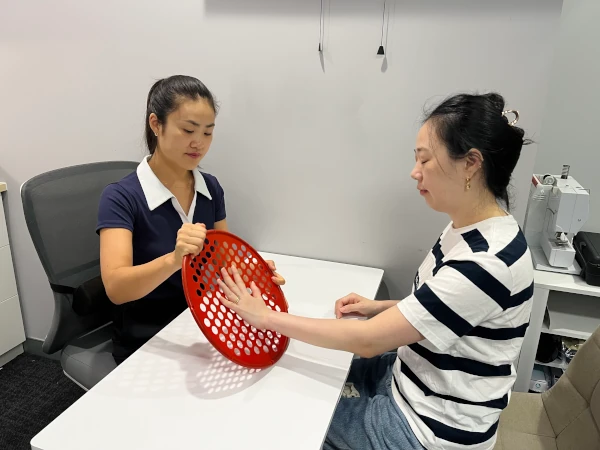
Exercise is important in the rehabilitation phase of hand therapy after an injury. Hand, wrist or elbow exercises provided by your hand therapist depend on the type of injury and the stage of healing. As your injury heals, exercises will be progressed through a tailored hand exercise program to help you return to full recovery.
Custom Splints and casts can immobilise to protect an injury until it heals. Splints can also be used to improve the range of motion through dynamic splinting. Tapes are also used to reduce swelling or allow a patient to return to sport whilst protecting the injury.
Dry needling is a treatment technique used to treat tight muscles or tissues causing pain or limiting range of motion. It is commonly used in tennis elbow, golfer’s elbow, thumb arthritis and de Quervain’s tenosynovitis.
If required, a hand physiotherapist can refer for an X-ray to identify if there are any fractures or arthritis. An X-ray scan will help a hand therapist decide whether a patient needs a splint, cast, or to see a hand surgeon.
You will be provided with a home exercise program as part of your hand therapy treatment. During your follow-up hand therapy appointment, your hand therapist will review your progress and upgrade the exercises as appropriate.
Disclaimer: Treatment timeframe, goals and typical treatments depend on the severity of the injury, whether surgical management is required, and your work occupation and hobbies. The information listed is a general guide only and may vary. Please discuss your individual treatment plan with your hand therapist or hand surgeon.

If you have a hand, wrist or elbow injury, you can see a hand therapist without a referral. A hand therapist will assess your condition to determine whether conservative treatment is appropriate or whether you need to see a hand surgeon or GP.
Early treatment ensures you receive the right diagnosis and care to help you recover sooner. Delaying treatment may lead to poorer outcomes or permanent joint deformities, such as swan-neck deformity or boutonniere deformity.
Coordinated care between health practitioners leads to better outcomes and more efficient treatment. If you are also seeing a hand surgeon or GP, your hand therapist will communicate with them directly regarding your treatment progress.
This allows your hand surgeon and GP to make better decisions on your return to work and hobbies capacity.
Yes, a hand therapist can treat a hand or wrist fracture without a doctor’s referral. There’s research and a growing trend to show that hand therapists are working as Advanced Scope Practitioners in managing closed hand injuries, including fractures. When necessary, a hand therapist will refer to a hand surgeon for an opinion.
Metacarpal and hand fractures are among the most frequently seen injuries in hand therapy practice. A recent study (Wong et al., 2022) found good agreement between hand therapists and hand surgeons in determining the management of adults with closed metacarpal fractures.
This means that when a patient presents with a closed metacarpal fracture, a hand therapist’s decision on whether to manage the injury conservatively or refer for a surgical opinion is consistent with what a hand surgeon would recommend.
A study in the UK (Fournier et al., 2025) described the development of a hand therapist-led clinic in managing closed hand fractures.
The service demonstrated that hand therapists can safely and efficiently lead closed hand trauma clinics, using their advanced clinical practice skills to assess closed hand injuries, determine appropriate management, and identify when a patient needs to be referred to a hand surgeon for a surgical opinion.
A recent study from a paediatric hand therapist-led clinic at Queensland Children’s Hospital (Dalton et al., 2025) found that a therapy-led model of care for acute paediatric closed hand injuries is safe, effective and of high value.
The study demonstrated that therapist-led care can maximise service access and improve patient outcomes, with all measures exceeding expected performance for function, pain, and health service experience. When necessary, patients can be referred to a hand surgeon for a surgical opinion.
Studies show that hand therapy-led clinics can safely and effectively manage chronic and sub-acute hand and wrist conditions with high patient satisfaction. This includes conditions such as carpal tunnel syndrome, trigger finger or thumb, de Quervain’s tenosynovitis, osteoarthritis, and wrist or hand ganglion.
Through effectively managing these conditions, hand therapist-led clinics may reduce hospital wait times, avoid unnecessary surgery, and maintain high‑quality patient outcomes (Glasgow et al., 2020; Lewis et al., 2020; Burton et al., 2021; Gavaghan et al., 2025). When diagnosis is unclear, a hand therapist may request further imaging and refer to a hand surgeon.
After hand or wrist surgery, you may be referred by a hand surgeon for hand therapy to help with your recovery. Hand therapy provides a wide range of treatments after surgery, including dressing change, wound care, splinting, range of motion exercises, strengthening, scar management and return to work or sport plan.
Research supports post-surgical splinting and early active range of motion for various forearm, wrist and hand conditions (Roll & Hardison, 2017). This includes bone injuries, tendon injuries, nerve injuries and general hand conditions.
Depending on the surgery you’ve had, you may need to see a hand therapist within the first week to ensure you have the best outcome. This includes flexor and extensor tendon repairs, and fractures fixed from surgery that are stable to commence early range of motion exercises (Tang et al., 2021; Collocott et al., 2020; Zhou et al., 2024).

Having a hand injury or condition can be debilitating. We use our hands and arms for most daily activities.
Not being able to use them may impact your ability to work, play sports, lift groceries or pick up your children. Seeing a hand therapist will help you return to your usual activities so you can do the things you enjoy.
You can refer to our table for a list of conditions that can be treated.


Hand therapy treatments are well supported by clinical research. Reviews of occupational therapy and hand therapy interventions for forearm, wrist and hand conditions show that hand therapist‑led programs improve pain, strength, range of motion, function and return to daily activities for adults with musculoskeletal problems (Roll & Hardison, 2017).
Specific trials have shown that splinting, exercise and education may reduce the need for surgery and improve patient satisfaction in conditions like carpal tunnel syndrome (Lewis et al., 2020).
The Accredited Hand Therapist (AHT) credential is a recognised specialised pathway in hand therapy awarded by the Australian Hand Therapy Association. Seeing an Accredited Hand Therapist means receiving care from an experienced hand therapist with advanced knowledge and skills in hand and upper limb rehabilitation.
A Practitioner in Hand Therapy works with an experienced Accredited Hand Therapist or is undertaking training requirements to become an Accredited Hand Therapist. Working under the supervision of an Accredited Hand Therapist ensures patients receive the best care and treatment outcome.
Chen Li is an Accredited Hand Therapist based in Sydney’s North Shore, with over 10 years of experience in assessing and treating conditions of the hand, wrist, and elbow.
She has extensive expertise, offering effective and conservative hand therapy treatment while supporting patients through post-surgical rehabilitation.

Be seen today at our North Shore or Northern Beaches clinic – seeing both adults while also offering hand therapy for children. Book online or contact us directly.
Posted by Chen Li in Clinic News on February 10th, 2026
First Published: February 2026 • 3 min read • Covers: New Location Introduction→ Conditions Treated → Services We Offer→ Meet Chen Li (Owner)→ Clinic Address Details
Hand Therapy Experts will now be offering hand therapy services on the Northern Beaches, while continuing to operate from our North Sydney (Mater Clinic) location.
With no referrals required, we treat all hand, wrist and elbow conditions to support the northern beaches community. Working closely with hand and upper-limb surgeons, general practitioners, insurance companies, and other healthcare professionals, we are dedicated to achieving the best outcomes for patients.
 Fractures & Breaks: Finger, hand, wrist, and elbow hand fractures
 Tendon Injuries: Including mallet finger and other tendon damage
 Post-Surgery Recovery: Expert hand surgery rehabilitation to restore function
 Tendonitis & Overuse: Tennis elbow, wrist pain, and trigger fingerNerve Compression: Carpal tunnel syndrome and cubital tunnel relief
 Arthritis Management: Hand and wrist arthritis including thumb arthritis
The Northern Beaches Clinic is being led by Chen Li, a highly credentialed Hand Therapist with over 10 years of real hands-on experience. Chen specialises in treating all types of hand, wrist and elbow problems in both grown-ups and kids – bringing a huge amount of know-how to the local area..
She holds the internationally recognised Certified Hand Therapist (CHT) credential from the USA and is an Accredited Hand Therapist with the Australian Hand Therapy Association.
Whether you’re recovering from surgery, managing a sports injury, or dealing with chronic pain such as RSI, Chen’s decade of experience means you receive personalised care that’s tailored to your condition in Sydney’s Northern Beaches.

Book Chen for your hand therapy appointment in Sydney’s Northern Beaches
Being centrally located in Cromer, we take bookings from patients from all areas of Sydney’s Northern Beaches, providing easy access from all neighbouring suburbs.
📍Hand Therapy Experts – Northern Beaches Address Details: 24 Middleton Road, Cromer NSW 2099. Located within Manly Warringah Gymnastics Club and Warringah Physiotherapy
Get Directions →
Chen Li is an Accredited Hand Therapist based in Sydney’s North Shore and Northern Beaches, with over 10 years of experience in assessing and treating conditions of the hand, wrist, and elbow.
She has extensive expertise, offering effective and conservative hand therapy treatment while supporting patients through post-surgical rehabilitation.