Posted by Chen Li in wrist pain on April 20th, 2026
First Published: 27 February 2026 • 15 min read • Covers: What a TFCC injury is → symptoms → anatomy → causes → conditions that mimic TFCC tears → treatment options (non-surgical & surgical) → when to see a hand therapist→ treatment steps → activity restrictions advice→ recovery guidance
Triangular Fibrocartilage Complex injuries is one of the most common wrist injuries treated by a hand therapist.
Research published by the National Library of Medicine in 2023 shows TFCC abnormalities can affect roughly 1 in 4 people under 30, which then rises up to 1 in 2 people over the age of 70.
In this essential guide, we’ll break down what causes TFCC injuries and tears, common symptoms to watch out for, treatment options and how a targeted rehabilitation program is the key to full recovery.
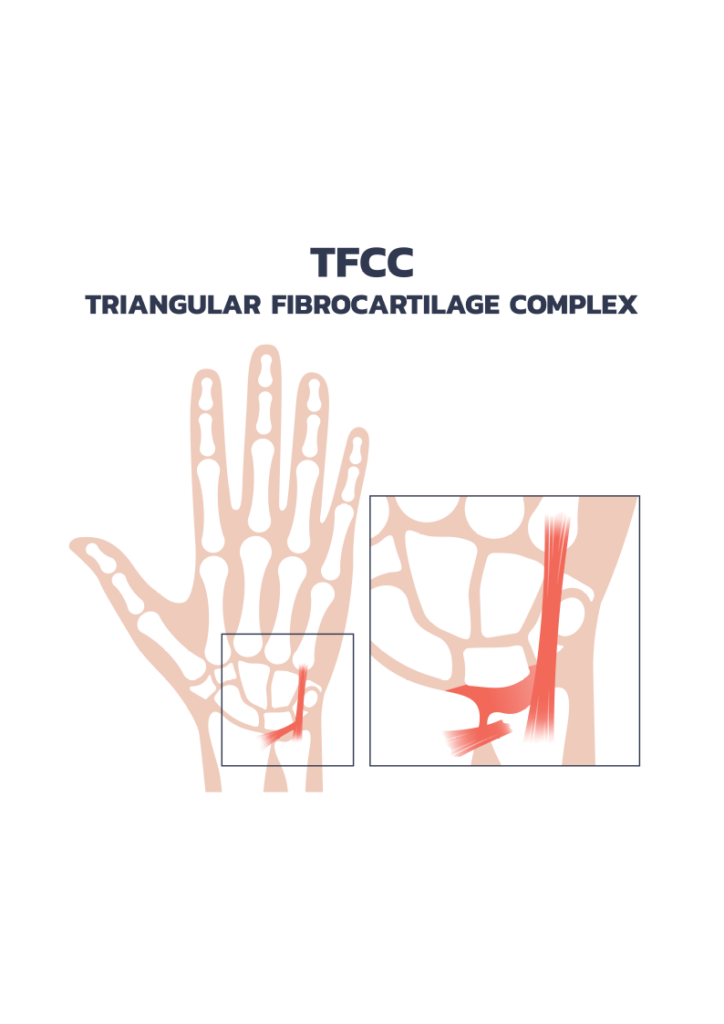
The triangular fibrocartilage (or TFCC ) is a highly complex load-bearing structure on the ulnar side of the wrist. Acting as a shock absorber and stabiliser for the “pinky side” of your wrist, it sits between the ulna bone and the small carpal bones and is made up of cartilage, ligaments and tendons.
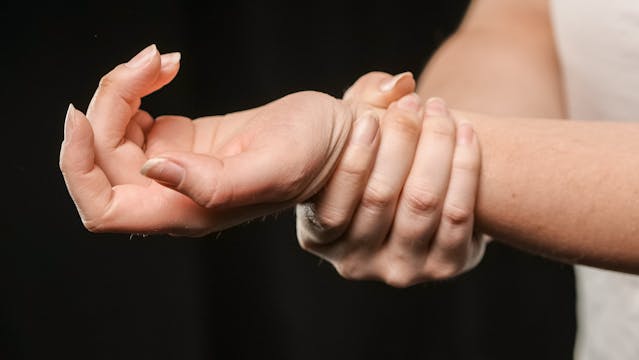
These work together to connect the two forearm bones to the wrist. When the TFCC is injured, the wrist can often feel weak, tired, unstable and painful especially on the little finger side.
Injuries of this nature can develop in many different ways, from a single traumatic event to gradual wear and tear over time. Understanding what caused your injury is an important first step. Treatment is fundamentally most effective once the reasons for the injury are understood. Broadly, Triangular Fibrocartilage Complex injuries fall into two categories: traumatic or degenerative.
Traumatic TFCC injuries can occur suddenly either by accident such as slipping on a wet floor or from external sources such as a rugby tackle where the wrist is forced into rotation.
Injuries are caused by a twist of the wrist or a distal radius fracture, which frequently involves a tear.
Unlike traumatic injuries, degenerative TFCC tears take time to develop. Repetitive loading of the wrist is usually a leading culprit, such as years of swinging a tennis racquet, lifting heavy loads on a worksite or long-term power tool usage
These repetitive practices slowly break down the cartilage and surrounding tissue. As we get older, this tissue gradually becomes thinner and less elastic, making it more vulnerable to tearing even without a specific incident.
Degenerative triangular fibrocartilage complex injuries are often associated with ulnocarpal abutment, where the ulna wrist bone sits higher than normal in relation to the radius wrist bone.
Degenerative injuries are harder to pinpoint than traumatic ones, as there is no single moment of injury and slowly creeps up on unsuspecting patients. Many people describe a slow build-up of ulnar-sided wrist pain that worsens with activity over months or years.
Ulnar-sided wrist pain (often known as the “low back pain of the wrist” ) is notoriously challenging to diagnose because several conditions can closely mimic a TFCC tear. This is one of the reasons why a thorough clinical assessment by a hand therapist is so important before any diagnosis is confirmed.
Ulnar-sided wrist pain (often known as the “low back pain of the wrist”) is notoriously challenging to diagnose because several conditions can closely mimic a TFCC tear. This is one of the reasons why a thorough clinical assessment by a hand therapist is so important before any diagnosis is confirmed.
Tears to the small ligaments connecting the wrist bones can produce ulnar-sided pain and instability.
Cartilage damage to nearby bones can cause the same localised aching feeling on the pinky side of the wrist and can look almost identical to a TFCC injury.
Several bone conditions share the same symptoms as a TFCC tear. Some of these include:
There are two tendons that run directly along the ulnar (pinky) side of the wrist. These are known as the ECU on the back and the FCU on the palm side.
Irritation or inflammation of either tendon is one of the most common conditions mistaken for a TFCC tear, as the pain location and aggravating activities (gripping, twisting) are nearly identical. Conditions such as tennis elbow is a good example.
While not as common as some of the other conditions, there are other causes of ulnar-sided wrist pain that can also mimic a TFCC injury.
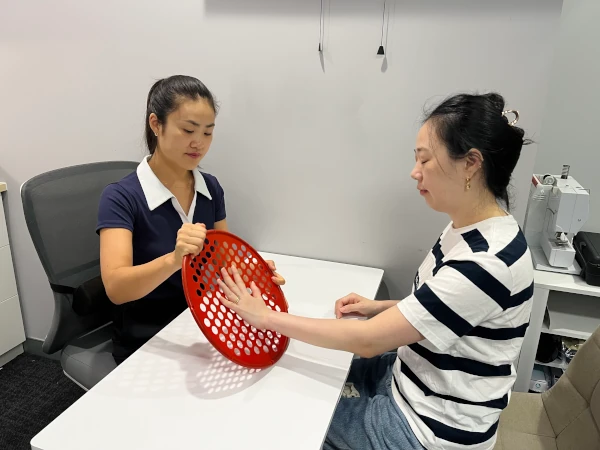
Clinics such as Hand Therapy experts offer conservative TFCC injury treatment. If no large or complex tears are found during initial assessment, then most ulnar-sided injuries can be treated through non-surgical means. This includes a period of custom splinting or wrist braces a wrist widget to stabilise the wrist joint as the complex heals.
Exercises that strengthen and stabilise the ulnar side of the wrist will also help the healing and allow you to return to normal activities, work, and activities of daily living.
Surgical repair is required if the injury doesn’t heal with splinting and exercises, or in cases of joint instability and complex tears that require mechanical fixation.
Depending on the severity and location of the lesion, specific procedures may differ. Referral to a hand surgeon by a general practitioner (GP) is required to determine whether the damaged complex requires surgery.
You should consider making an appointment to see a hand therapist as soon as you notice or start feeling persistent wrist pain, hear constant clicking noises or feel a large degree of weakness.
We also recommend not waiting too long; try to book an appointment with us within the first few weeks. Early assessment is key to avoiding untreated TFCC injuries from becoming a chronic issue, such as ongoing instability or the development of long-term joint problems. A hand therapist has the expertise to assess, diagnose, and treat these injuries, helping you recover safely and return to normal activities as soon as possible.
| Signs | What It May Indicate |
|---|---|
| Ongoing pain | Pain on the pinky side of your wrist |
| Clicking or catching | Clicking, popping, or a catching feeling when moving your wrist |
| Weak grip | Loss of strength or a feeling your wrist might give way |
| Pain with pressure or twist | Hurts when pushing, lifting, or twisting objects |
| Recent injury | Pain or swelling after a fall or forceful wrist twist |
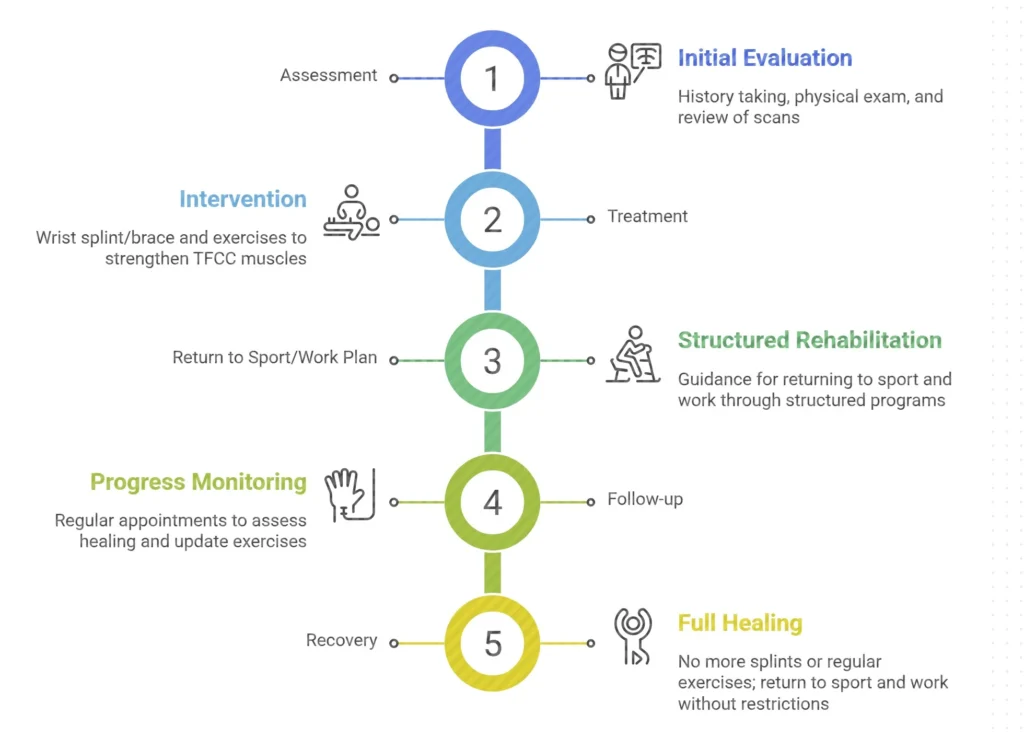
Hand therapy is important in non-surgical and surgical management of TFCC injuries. Below is a step-by-step process on how injuries are managed at Hand Therapy Experts:
When you have a TFCC injury, certain activities and exercises can worsen your condition, especially if it hasn’t fully healed yet. Here are some common activities to avoid:

Be seen today by a certified wrist pain specialist at our North Shore or Northern Beaches clinic. Book online or contact us directly.
Chen Li is an Accredited Hand Therapist based in Sydney’s North Shore, with over 10 years of experience in assessing and treating conditions of the hand, wrist, and elbow.
She has extensive expertise, offering effective and conservative hand therapy treatment while supporting patients through post-surgical rehabilitation.


